
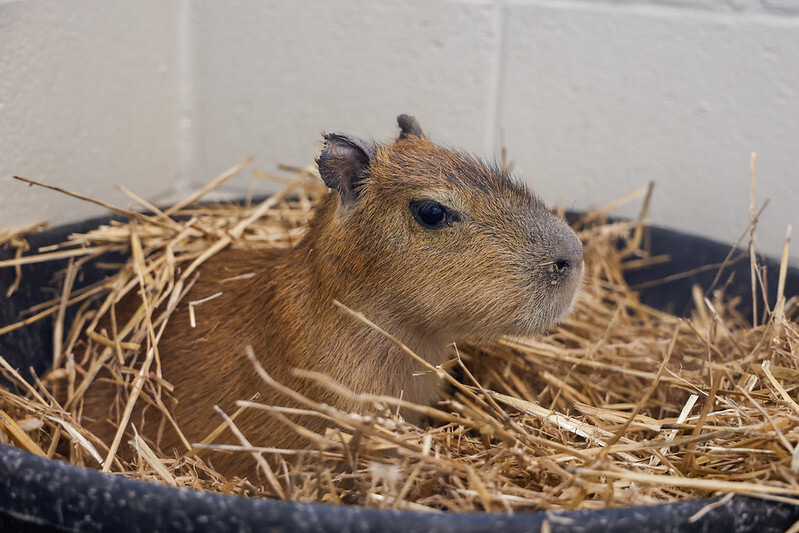
Nashville Zoo adds two capybaras to its ever-growing animal family for the first time in its history. The male is four months old and was born at Sacramento Zoo. The female is three months old and was born at Cape May Zoo. Andouille(m) and Brie(f) are a mated pair, and they will live in the Zoo’s HCA Healthcare Veterinary Center nursery until they are old enough to be introduced to a new mixed-species South American habitat. Guests can now see Brie through the nursery windows and via a live stream on the Zoo’s website. Andouille will arrive in the coming weeks.
The new multi-species habitat will be located where the previous tapir exhibit existed, right after Flamingo Lagoon. The new habitat will be home to giant anteaters and the new capybaras. The giant anteaters are currently on the Zoo’s Backstage Pass Tour list and have lived behind-the-scenes, making this their first time being on habitat for the public to see in over 15 years. Currently under construction to better support the new animal’s lifestyle, the South American habitat will be open to the public in the coming months.
“Capybaras are such a unique animal,” said Nikole Edmunds, Hoofstock Area Supervisor at Nashville Zoo. “They will make a fantastic addition to our animal family. Adding a new species to the Zoo provides more opportunities to educate the public, not only about them, but also about the conservation efforts that are saving millions of species worldwide.”
Capybara (Hydrochoerus hydrochaeris), closely related to guinea pigs and rock cavies, is native to Central and South America. The large aquatic rodents roam in the swampy, grassy regions bordering rivers, ponds, streams, and lakes. Capybaras, the largest rodents alive, are herbivores and use their long, sharp teeth to consume grass and water plants. An adult capybara can eat six to eight pounds of grass per day. As the season changes and fresh grass and water plants dry up, capybaras eat reeds, grains, melons, and squashes. Interestingly, they also eat their own poop to get beneficial bacteria to help their stomach break down the thick fiber in their meals.
According to the International Union for the Conservation of Nature, the capybara is listed as of least concern, but like most animals, their ecosystems are increasingly threatened every day. The species’ natural habitat faces deforestation, destruction, and illegal poaching. The animal is hunted in select locations, where people have used the rodent as a food source for centuries, and may sometimes wear capybara teeth as ornaments.
For more information on Nashville Zoo, visit www.nashvillezoo.org.


Please join our FREE Newsletter