

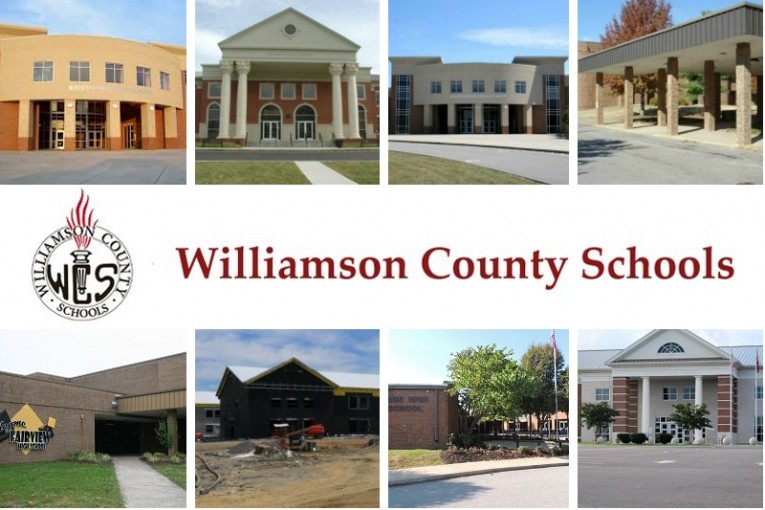
The county keeps growing, in large part because of its high achieving school system. But, of course, the more growth the harder it is for the schools to keep operating at such a high level.
Two weeks ago, the county presented the results from an Education Impact Fee study, that looked at collecting fees in the county. Present were commissioners, county leaders and stakeholders (those affected should fees be put in place.)
As a follow up to the study results, and as part of ongoing efforts by the Education Budget Task Force, the county announced on Monday that it will host a workshop on Wednesday, August 24.
Carson Bise of Tischler Bise, the firm that undertook the study, will lead the discussion at the meeting, which will be held in the auditorium of the Williamson County Administrative Complex at a time yet to be determined.
The Education Impact Fee would pay for the one-time costs associated with building new schools or expanding existing ones, so as to abrogate the need for increasing property taxes or issuing bonds- id est: create more debt.
“We are in our second or third meeting of the education budget task force, and in our investigation process we have been looking at the data,” county mayor Rogers Anderson said. “And I think that most people understand and know we are trying to figure out a way that new growth, new folks moving in, will share the burden, and that it is not put on the existing residents.”
Current methods of funding are not adequate for the needs the county anticipates, and the task force has been considering recommending an impact fee, according to Anderson.
Bise presented the results to commission members, interested parties and stakeholders- the people who will be paying it, at the study presentation.
The study presented two options of a plan, both of which would charge a fee to the developer of each new home in the county. The first option places a set fee on single-family homes and another on multi-family homes. The second option sets a variable rate that increases with square footage, under the assumption that the larger the home, i.e. more bedrooms, the more school-aged children who will live there over the lifespan of the house.
Because Franklin Special School District (FSSD) already collects its own separate tax, the fee for houses built in that district are lower than those in the rest of the county.
The fees break down thus:
First option
(outside FSSD):
Single-family home: $10,898
Multi-family home: $5,745
(inside FSSD):
Single-family home: $3,996
Multi-family home: $1,1619
Second option
(outside FSSD):
1,799 square feet or less: $3,860
1,800 to 2,199 square feet: $6,813
2,200 to 2,599 square feet: $9,112
2,600 to 2,999 square feet: $11,041
3,000 to 3,399 square feet: $12,654
3,400 square feet or more: $14,071
(inside FSSD):
1,799 square feet or less: $1,579
1,800 to 2,199 square feet: $2,609
2,200 to 2,599 square feet: $3,373
2,600 to 2,999 square feet: $4,019
3,000 to 3,399 square feet: $4,546
3,400 square feet or more: $5,000
“Those most affected by the fee will be local small, high-quality builders,” Bise said when presenting the results, since large national building companies already factor this price into their houses. “Most likely this cost will be pushed onto the consumer, the home buyer. But it is a one time fee, affecting only new construction on new land. Let’s say you tear down a single-family home and rebuild one in its place, the fee will not be re-collected.”
There were 37,711 students in Williamson County Schools and Franklin Special School District in 2013, the year the study used for its data. Those numbers are expected to skyrocket in coming years as the county is projected to double its population by 2040. As the population increases, more schools will need to be built. Newly constructed Nolensville High School cost about $40 million.
According to commissioner Todd Kastner, the fees could provide up to $30 million per year, if the average fee collected is about $12,000 and considering the average number of new homes constructed over the past three years (around 2,500 homes built.) Taking into account debt service, it could save the county around $38 million a year.
There is a Private Act of the Tennessee legislature that would require the county to spend any fees it collects within six to 10 years.


Please join our FREE Newsletter