

If you’ve ever stared at a loading wheel during an important video call, waited far too long for a file to upload, or wondered why your “high-speed” internet suddenly crawls at night, you’re not alone. Across Middle Tennessee, many households and small businesses pay for fast internet plans—but still feel like something’s missing.
On paper, the numbers look great. In real life? Not always.
That gap between advertised speeds and everyday performance is exactly why taking a speed test matters. A simple test can reveal whether your internet is actually delivering what you’re paying for—or quietly holding you back. And once you understand what those results mean, you’re better equipped to choose a connection that truly supports how you live and work.
At United Communications, we believe internet speed shouldn’t be a mystery. Let’s break down what a speed test really measures, why upload speed matters more than most people realize, and how fiber internet changes the experience altogether.
What You’ll Learn in This Article
- Why internet speeds often feel slower than advertised
- What download speed, upload speed, and latency actually mean
- Why upload speed plays a critical role in modern internet use
- How to properly run a speed test—and where to do it
- How to read your results with confidence
- What steps to take if your speeds don’t match your needs
Are You Really Getting the Speeds You Pay For?
Most internet plans are sold using one big number—download speed. It’s the headline that grabs attention: 300 Mbps, 500 Mbps, Gig speeds. But that single number doesn’t tell the whole story.
Real-world internet performance depends on several factors: how many devices are connected, how your home is laid out, whether you’re using Wi-Fi or a wired connection, and the technology delivering your service. During peak hours, congestion on shared networks can slow speeds dramatically, even if your plan promises otherwise.
That’s why two neighbors on similar plans can have completely different experiences—and why frustration builds when the internet doesn’t keep up with daily demands. Running a quick speed test helps cut through assumptions and shows what’s actually happening on your connection at that moment.
What a Speed Test Actually Measures
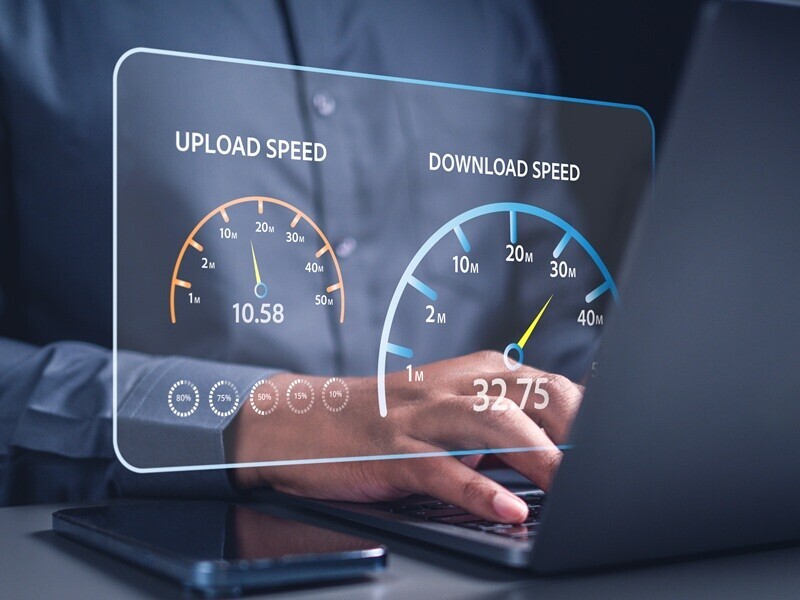
When you run an internet speed test, you’re usually shown three main results. Each one tells a different part of the story.
Download speed measures how quickly data comes to you. This affects how fast web pages load, how smoothly videos stream, and how quickly apps update.
Upload speed measures how fast data travels from you to the internet. This impacts video calls, file sharing, cloud backups, smart home devices, and remote work tools.
Latency (or ping) measures how quickly your device communicates with servers. Lower latency means faster response times, which matters for video conferencing, gaming, and real-time collaboration.
Together, these metrics give you a clearer, more honest picture of how your internet performs day to day.
Why Upload Speed Matters More Than You Think
A decade ago, most households mainly downloaded content. Today, we upload constantly—often without realizing it.
Video meetings, online classes, security cameras, cloud storage, live streaming, and smart devices all depend on strong upload speeds. Traditional cable and DSL connections are built with fast downloads but much slower uploads, creating bottlenecks that lead to frozen video, lag, and dropped connections.
Fiber internet works differently. It delivers symmetrical speeds, meaning upload and download speeds are equally fast. That balance allows households and businesses to work, stream, and connect simultaneously—without one activity slowing everything else down.
If you want to explore how fiber compares to other connection types, United breaks it down clearly on their fiber internet overview page.
Take the United Communications Speed Test
Running a speed test is easy—but where you run it matters.
United Communications offers a built-in speed test designed specifically for its fiber network, giving you a more accurate view of real-world performance. Testing through your local provider helps eliminate variables that can skew results.
You can take United’s speed test directly here.
It’s also helpful to compare results using a reliable third-party tool like the one from HighSpeedInternet.com
For best results, try testing:
- On a wired connection, if possible
- With other apps and devices paused
- At different times of day
Patterns over time often reveal more than a single test.
How to Read Your Results
Once the test finishes, it’s natural to ask: Is this good?
For streaming, strong download speeds and low latency help prevent buffering and quality drops.
For remote work and video calls, upload speed and latency matter just as much as download speed.
For gaming, low latency is often more important than raw speed.
If your results consistently fall below expectations—especially on upload speed—it may indicate your connection isn’t designed for how you use the internet today.
What to Do If Your Speeds Fall Short
Before assuming your service is the issue, try a few quick checks:
- Test closer to your router or use a wired connection
- Restart your modem and router
- Reduce the number of active devices
- Place your router centrally and away from obstructions
If problems continue, that’s where local support makes a difference. United’s customer support team understands the specific network conditions across Middle Tennessee and can help diagnose issues quickly.
You can reach United’s support team.
Sometimes a small adjustment solves the issue. Other times, it’s a sign that your connection needs an upgrade built for modern usage.
Experience the Difference with Fiber
True internet speed isn’t just about advertised numbers—it’s about consistency, reliability, and performance you can feel. When your connection keeps up effortlessly, work runs smoother, entertainment feels seamless, and everyday frustrations fade away.
Fiber internet delivers speed without compromise, built for today’s connected homes and businesses. Taking the speed test challenge is the first step toward understanding whether your current connection truly supports your needs.
If your results leave you wanting more, explore United’s fiber internet options or talk with a local expert about upgrading your plan.
Because the fast internet shouldn’t just look good on paper—it should work when it matters most.


Please join our FREE Newsletter